
Staff

Professor Anna Nekaris

PhD

Professor in Anthropology (Primate Conservation), Course Leader- MSc in Primate Conservation

Education

PhD and MA in Biological Anthropology, Washington University, St Louis.

Certificat de Primatologie, Universite Louis Pasteur, Strasbourg, France.

BA in Biological Anthropology, University of Missouri, Columbia, USA.

Current Positions

  • Professor in Primate Conservation
  • Course Tutor MSc Primate Conservation

Research Interests

  • Conservation
  • Behavioural Ecology
  • Speciation
  • Fragmentation
  • Nocturnal mammals and colobines

Modules Taught

  • Undergraduate: Methods and Analysis in Biological Anthropology
  • Undergraduate: Introduction to Biological Anthropology
  • Postgraduate: Primate Conservation - Research Methods, Conservation Education
  • Postgraduate: MSc Primate Conservation Final Project

Research Interests

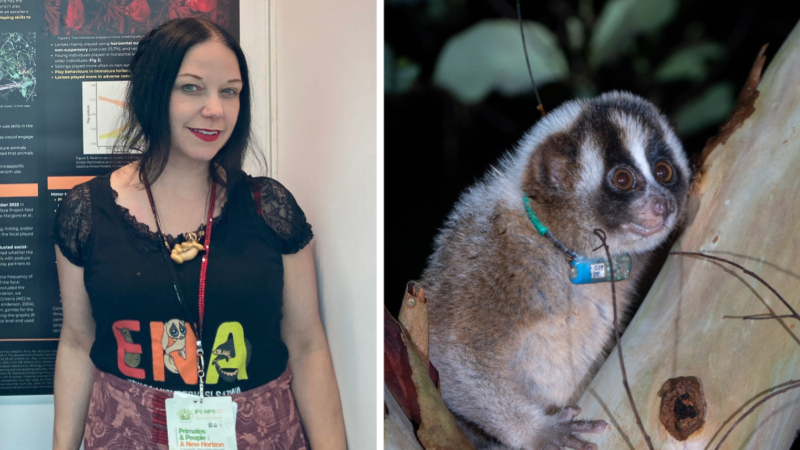
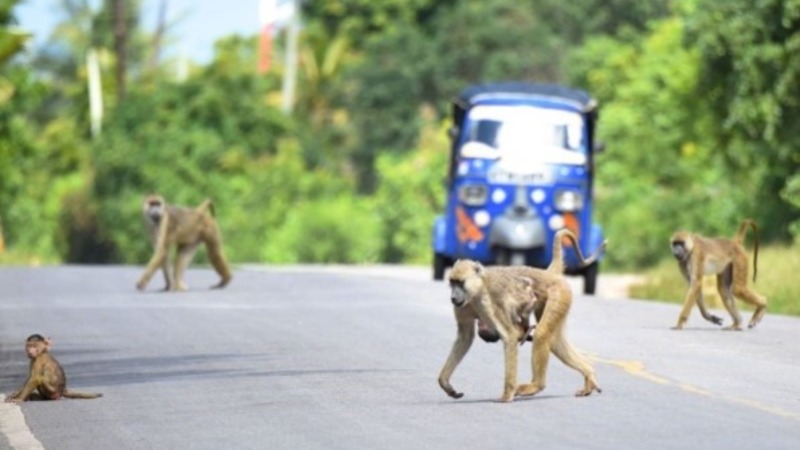
Although I have conducted fieldwork on bats, small carnivores , mouse deer, and giant squirrels, my primary research focus is on primates. I have conducted long-term studies of Indian and Sri Lankan slender lorises. I have also studied the community ecology of Sri Lanka's rainforest primates, including toque macaques and purple-faced langurs. In particular I have examined the effects of fragmentation on populations throughout Sri Lanka's sparse remaining rainforests. My current research project looks at the diversity of Asian slow lorises, both in the field and using museum specimens. Morphological, behavioural and vocal analyses are being used to uncover diversity within this group, and are being used to develop long-term plans for their conservation.

I am currently being funded by the Leverhulme Trust, and in collaboration with International Animal Rescue, a UK-based charity, am examining the fascinating functional ecology of slow loris venom. We hope to understand why slow lorises have venom and how we can use this knowledge to curtail the horrific pet trade in this unique animals.


Postdoctoral Research Fellow

Dr Sandra Thoren: Form and function of slow loris venom - prey, parasites and predation in association with International Animal Rescue and Dr Bryan Grieg Fry @ University of Queensland.


Research Students

Camille Coudrat: Ecology and conservation of the red-shanked douc monkey (Pygathrix nemaeus) in Nakai Nam Theun National Protected Area, central-east Laos, and its conservation status in Indochina. (PhD Candidate)

Annie Holt: A comparative study of captive primate breeding programmes' success in conservation of threatened primates (MRes Candidate)

Tatiana Iseborn: Why do slow lorises change their wardrobe?  Thermo-regulation and coat colour change is pygmy lorises (Nycticebus pygmaeus) (PhD Candidate)

Richard Moore: Developing protocols for reintroducing Asian slow lorises: a Javan slow loris (Nycticebus javanicus)
case study.(PhD Candidate)

Johanna Rode: Functional ecology of Javan slow loris venom and implications for conservation. (PhD Candidate)


MSc Primate Conservation Students

Amanda Gray � Developing enrichment for victims of the pet trade (Nycticebus spp): lifelong care and reintroduction possibilities for lorises with clipped teeth

Laura Ginn � The Forgotten Primates of Burkina Faso: assessing nocturnal and diurnal primate diversity in Burkina Faso's little studied acacia woodlands


Anne-Marie Mascaro � Monkey Friendly.com: using branding to win new players in the field of primate conservation


Joshua Robison � Do chimpanzees (Pan troglodytes) still persist in Burkina faso? Surveys and assessment of local people's knowledge


Julie Tough � Connecting classrooms - empowering UK and Javan children to save the slow loris


Recent Papers
Nijman V, Nekaris KAI, Bigford M 2012. Asian medicine: small species at risk. Nature. 481: 265.

Rogers L, Nekaris KAI 2011. Behaviour and habitat use of the Bengal slow loris Nycticebus bengalensis in the dry dipterocarp forests of Phnom Samkos Wildlife Sanctuary, Cambodia. Journal of Cambodia Natural History. 2:104-113.

Nekaris KAI,
Nijman V, Godfrey LR (2011). Anthropology: follow field primatologists. Nature 471:448.


Nekaris KAI
& Bearder SK. (2011). The strepsirrhine primates of Asia and Mainland Africa: diversity shrouded in darkness. Pp 24-45 in Campbell C, Fuentes A, MacKinnon K, Bearder SK, Stumpf R, editors. Primates in Perspective. Oxford: Oxford University Press. 2nd Ed.

Nijman V, Nekaris KAI, Donati G, Bruford M, Fa J (2011). Primate conservation: measuring and mitigating trade in primates. Endangered Species Research.13:159-161

Rode J, Nekaris KAI, Rode EJ (2011).
Preliminary conservation status assessment for the Data Deficient northern giant mouse lemur Mirza zaza. Lemur News 11-12.

Schwitzer C, Glatt L, Nekaris KAI, Ganzhorn JU.
(2011 In press) Responses of animals to habitat alteration: An introduction focussing on primates. Endangered Species Research.

Starr CR, Nekaris KAI, Streicher U, Leung L (2011). 
Field surveys of the threatened pygmy slow loris (Nycticebus pygmaeus) using local knowledge in Mondulkiri Province, Cambodia. Oryx 45:135-142.

Nijman V & Nekaris KAI (2010)
Testing susceptibility of crop-raiding by primates by assessing the usefulness of crop- and farm-specific risk values. Journal of Applied Animal Science. 127:125-129.

Moore RS,  Nekaris KAI, Eschmann C (2010).
Habitat use by western purple-faced langurs (Colobinae: Trachypithecus vetulus nestor) in a fragmented suburban landscape. Endangered Species Research.12:227-234.

Nekaris KAI
, Shepherd CS, Starr CS, Nijman V. (2010). Exploring cultural drivers for trade via an ethnoprimatological approach: a case study of slow and slender lorises (Nycticebus and Loris) in South and Southeast Asia. American Journal of Primatology. 71:1-10.

Nekaris KAI
, Starr C, Collins RL, Navarro-Montes, A. (2010) Comparative ecology of exudate feeding by Asian slow lorises (Nycticebus). In (Burrows A &Nash L, eds) The Evolution of Exudativory in Primates. Springer: New York. Pp: 155-168.

Nijman V & Nekaris KAI. (2010) Checkerboard patterns, interspecific competition and extinction: lessons from distribution patterns of tarsiers and slow lorises in insular Southeast Asia. International Journal of Primatology. 31:1147-1160.

Nijman V & Nekaris KAI. (2010) Changes in levels of tolerance towards commensal primates in relation to deforestation in Sri Lanka. International Journal of Pest Management 56 (2): 153-158.

Starr CR, Nekaris KAI, Streicher U, Leung L (2010).
Widespread use of slow lorises (Nycticebus bengalensis and N. pygmaeus) in traditional medicines in Cambodia as an impediment for their conservation. Endangered Species Research.12:17-23.

Svensson MS, Samudio R, Bearder SK, Nekaris KAI. (2010) Density estimates of Panamanian owl monkeys Aotus zonalis in three habitat types. American Journal of Primatology. 72(2):187-192.


Contact

Professor Anna Nekaris

Tel: +44 (0)1865 483767
Fax: +44 (0)1865 483937

postal address

Selected Publication

Primate Anti-Predator Strategies Primate Anti-Predator Strategies, 2007

Since the 1960s, primatologists have recognized the impact of predation on the evolution of morphology, the social systems and cognitive behaviour of monkeys and apes, but few studies considered its impact on the prosimians - lemurs, lorises, galagos and